Why NOC Matters Registry and Inteqal Process in Abdullah City.
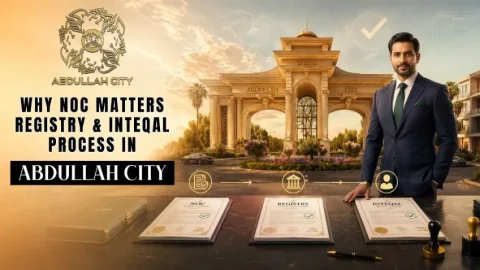
If you have spent any time looking at plots in Rawalpindi or Islamabad, you have probably come across one three-letter word that decides whether a housing project is worth your money: NOC. It sounds like paperwork, but it is really the difference between owning a home with a clean legal history and owning a headache. For anyone eyeing a plot in Abdullah City on Chakri Road, understanding what NOC means, how registry and inteqal work, and where the project currently stands is not optional homework. It is the first thing you should sort out before you sign anything.
What Exactly Is an NOC, and Why Does It Matter So Much?
NOC stands for No Objection Certificate. In simple words, it is the government's way of saying "we have checked this housing scheme's land records, layout plan, and development approach, and we have no objection to it going ahead." In Rawalpindi and the surrounding areas, this certificate is issued by the Rawalpindi Development Authority, commonly known as RDA. Why does this piece of paper carry so much weight?
Pakistan's Real Estate Market:
Because Pakistan's real estate market, especially around the twin cities, has no shortage of housing societies that started selling plots long before their land was cleared or their layout was approved. Some of these projects run into ownership disputes years later. Others get stuck in litigation over agricultural land conversion, or discover that part of their land actually belongs to someone else. Buyers in these societies often find their investment frozen, sometimes for years, while the courts sort things out.
An NOC does not eliminate every risk, but it tells you that a government body has reviewed the essentials: is the land actually owned by the developer, does the layout meet planning standards, are roads and utilities accounted for. Without it, you are largely trusting the developer's word. Abdullah City holds a clear, verified legal standing with an official Non-Encumbrance Certificate (NEC) and Registry-Inteqal status. This means the land designated for the society is completely free from any prior legal claims, active court disputes, or hidden bank mortgages, ensuring absolute transparency for real estate investors.
Where Abdullah City Stands on the NOC Question
This is where buyers need to be honest with themselves rather than just believing the nearest marketing brochure. Abdullah City is being developed by Aziz Builders on Chakri Road, close to the M-2 Motorway, and the project Abdullah City Approved NOC from RDA. Different sources describe the current status differently. Some marketing material describes the project as fully approved. Other reporting says the file is still moving through RDA, but the Project is Officially Approved by RDA (Rawalpindi Development Authority).
Single Ownership The One Thing Abdullah City Does Have Going for It
One detail that genuinely works in Abdullah City's favor is single ownership of the land. A large share of the disputes that plague housing societies in Pakistan trace back to land that belonged to dozens, sometimes hundreds, of different families before a developer stitched it together. When ownership is fragmented like that, disagreements are almost guaranteed. Someone eventually claims they were never paid fairly, or a family member contests a sale that happened decades ago.
Registry and Inteqal: What Actually Happens When You Buy
Registry:
Registry is the formal registration of a sale deed with the local Sub-Registrar's office. It is the document that proves a transaction took place and records the sale price, the parties involved, and a description of the property. Once registered, this deed becomes part of the public record. Inteqal, sometimes called mutation, is the step that follows. It updates the official revenue record so that your name replaces the seller's name as the recorded owner of that piece of land. Without inteqal, you might have a registered sale deed, but the government's own land records could still show the previous owner.
Inteqal:
Inteqal closes that gap. For a buyer, the process typically looks like this: verify the seller's title documents, confirm there are no outstanding dues or disputes on the specific plot, execute and register the sale deed at the relevant registrar's office, and then apply for mutation so the revenue record reflects the change. In a society like Abdullah City, where the developer highlights registry and inteqal-based transfers, buyers should ask to see the actual documents at each stage rather than accepting verbal assurances.
What This Means If You Are Considering Abdullah City
None of this is meant to scare you away from the project or to sell it to you either. It is meant to help you ask better questions. Before committing money, ask the developer or their authorized dealer for the current NOC application status directly from RDA, not just a certificate copy that could be outdated.
Ask to see the Registry and Inteqal documents for the specific plot you are interested in, not A sample from a different block. and treat single ownership as a genuine advantage, but not a substitute for verifying every step yourself. Buying property is one of the biggest financial decisions most families make. A little patience at the verification stage costs you nothing but time. Whatever you decide about Abdullah City, You can visit their Head office without any worries.